
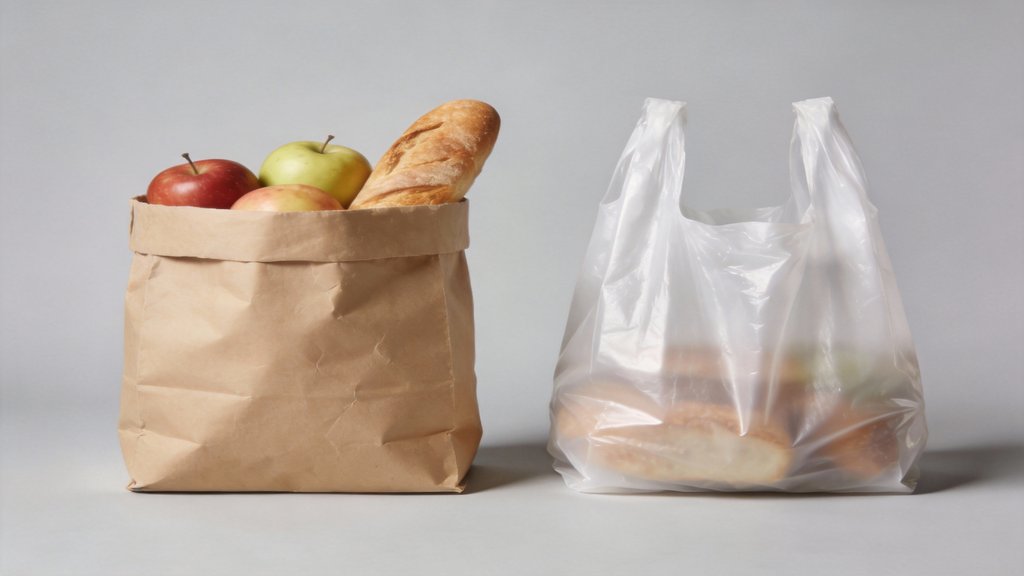
For decades, the question “paper or plastic?” has echoed through grocery store checkout lines, sparking casual debates about environmental responsibility. Many consumers default to paper bags, assuming their biodegradable nature makes them the clear eco-friendly choice, while others favor plastic for its durability and low cost. The truth, however, is far more nuanced. To make an informed decision, you need to look beyond surface-level assumptions and evaluate critical factors tied to paper vs plastic bags environmental impact, paper vs plastic bags carbon footprint, paper vs plastic bags decomposition rate, paper vs plastic bags durability comparison, and paper vs plastic bags waste management.
Key Takeaways
- Paper vs plastic bags environmental impact varies drastically across their full lifecycle, with paper requiring far more water and energy to produce but plastic posing long-term pollution risks.
- Paper vs plastic bags carbon footprint analysis shows paper has higher production emissions, but repeated reuse can narrow or reverse this gap for plastic bags.
- Paper vs plastic bags waste management and recyclability differ widely: paper is easily recycled curbside, while plastic bags often jam sorting machinery, limiting recycling access.
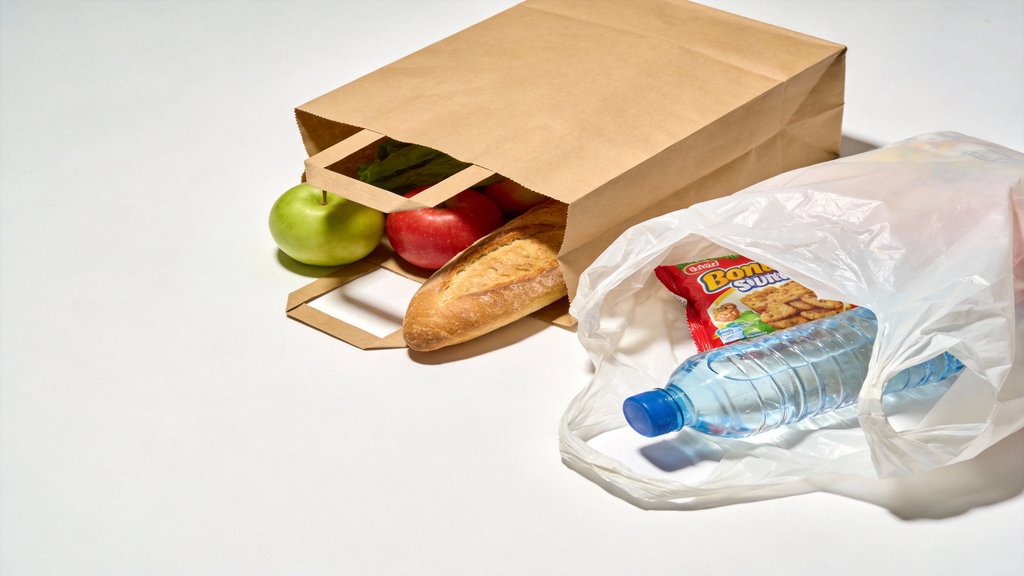
Lifecycle Analysis: Paper vs Plastic Bags Environmental Impact
When comparing paper and plastic bags, it’s essential to examine their paper vs plastic bags environmental impact from raw material extraction to end-of-life disposal, rather than focusing on a single stage.
Paper bags are often celebrated for being made from a renewable resource: trees. When sourced from FSC-certified, sustainably managed forests, this can support responsible land stewardship, with harvested trees replaced to maintain ecosystem health. However, the production process tells a different story. Manufacturing a single paper bag requires four times more energy and up to 20 times more water than producing a plastic bag, according to multiple environmental studies. The process also generates higher levels of greenhouse gas emissions, from both energy use and the chemical treatments involved in pulping wood. Additionally, widespread paper bag production contributes to deforestation risks if not paired with strict reforestation policies; the U.S. alone uses 10 billion paper bags annually, requiring roughly 14 million trees each year.
Plastic bags, by contrast, are made from nonrenewable fossil fuels like petroleum, whose extraction and refining contribute to habitat destruction, air pollution, and carbon emissions. While plastic production uses fewer resources upfront, the material’s long-term environmental toll is significant. Traditional plastic bags can persist in the environment for 400 to 1,000 years, breaking down into microplastics that contaminate soil, waterways, and the food chain. Marine life is particularly vulnerable: plastic bags are often mistaken for jellyfish by seals, turtles, and birds, leading to injury or death when ingested.
Carbon Footprint, Decomposition, and Durability: Paper vs Plastic Bags Carbon Footprint, Paper vs Plastic Bags Decomposition Rate, and Paper vs Plastic Bags Durability Comparison
Three interconnected factors—paper vs plastic bags carbon footprint, paper vs plastic bags decomposition rate, and paper vs plastic bags durability comparison—are critical to understanding their true environmental cost.
Paper vs Plastic Bags Carbon Footprint
The paper vs plastic bags carbon footprint is a key metric for measuring their contribution to climate change, and it reveals surprising disparities between the two. At first glance, paper bags might seem like the lower-emission option, thanks to trees’ ability to absorb carbon dioxide as they grow. However, this benefit is often offset by the energy-intensive production process. Studies show that paper bag manufacturing releases more greenhouse gases than plastic, due to the need for logging, transportation, and high-temperature pulping. Even with sustainable forestry practices, the carbon cost of replacing harvested trees and processing wood into paper can outweigh the carbon sequestration benefits.
Plastic bags have a smaller paper vs plastic bags carbon footprint during production, as they require less energy and water to make. However, this advantage diminishes if bags are used only once. The U.K. Environment Agency found that a single-use plastic bag has a lower carbon impact than a single-use paper bag, but if a plastic bag is reused just once—for example, as a trash liner—it becomes even more carbon-efficient. For paper bags to match the carbon footprint of a reused plastic bag, they need to be used at least seven times, according to the same study.
Paper vs Plastic Bags Decomposition Rate
One of the most common misconceptions about paper vs plastic bags decomposition rate is that paper is always the more sustainable choice because it decomposes faster. While this is true under ideal conditions, real-world disposal complicates the picture.
In a compost pile or well-aerated soil, uncoated paper bags break down in just a few weeks, leaving behind nutrient-rich material that benefits soil health. Even in landfills, where conditions are anaerobic (lacking oxygen), paper will eventually decompose, though it may take months or years. Crucially, paper bags do not leave behind harmful residues, making them a safer choice for wildlife if littered.
Plastic bags, on the other hand, do not biodegrade in any meaningful timeframe. Instead, they photodegrade, breaking down into tiny microplastics that persist in the environment indefinitely. In landfills, where they are often sealed off from sunlight, plastic bags can remain intact for centuries. When littered, they accumulate in oceans, forests, and urban areas, posing a threat to animals and ecosystems. However, innovations in biodegradable and compostable plastics are changing this landscape: some new plastic bags can break down in home compost piles within a few months, though these require proper disposal to fulfill their eco-friendly potential.
Paper vs Plastic Bags Durability Comparison
A paper vs plastic bags durability comparison reveals that reusability is a make-or-break factor for reducing long-term environmental impact. Paper bags are notoriously fragile: they tear easily when wet or overloaded, making them unsuitable for carrying heavy or damp items. This lack of durability means most paper bags are used only once, negating many of their potential environmental benefits. While some thicker, reinforced paper bags can be reused, they are not as practical for repeated use as plastic or cloth alternatives.
Plastic bags, by contrast, are highly durable and water-resistant. A single high-density polyethylene (HDPE) plastic bag can be reused dozens of times for grocery shopping, carrying laundry, or lining trash cans. When reused consistently, plastic bags can reduce overall waste and lower their environmental impact significantly. The problem, however, is that most consumers do not reuse plastic bags: studies show that the majority are thrown away after just one use, turning a potentially low-waste item into a major source of litter.
Paper vs Plastic Bags Waste Management and Recyclability
The final consideration is how paper and plastic bags fit into existing paper vs plastic bags waste management systems, including recycling infrastructure and landfill capacity.
Paper bags are widely accepted in curbside recycling programs, making them easy to recycle for most consumers. When recycled, they can be turned into new paper products, reducing the need for virgin wood pulp. However, recycling paper still requires energy and water, and each recycling cycle weakens the paper fibers, limiting how many times they can be reused. Coated or waxed paper bags, often used for takeout food, are not recyclable and must be thrown away, adding to landfill waste.
Plastic bags are far more challenging to recycle as part of paper vs plastic bags waste management. While many grocery stores offer drop-off bins for plastic bag recycling, curbside programs rarely accept them due to their tendency to jam sorting machinery. As a result, only a small percentage of plastic bags are recycled globally; most end up in landfills or as litter. Even when recycled, plastic bags are often downcycled into lower-quality products, such as plastic lumber, rather than being turned into new bags.
Conclusion
The decision between paper and plastic bags is not a simple one. Paper bags offer faster decomposition and easier recyclability but come with high resource costs during production, impacting paper vs plastic bags environmental impact and paper vs plastic bags carbon footprint. Plastic bags are durable and energy-efficient to make but pose long-term environmental risks if not reused, affecting paper vs plastic bags decomposition rate and paper vs plastic bags waste management. Ultimately, the most sustainable choice depends on how you use and dispose of the bag. For single-use scenarios, paper may be the better option if you have access to composting or recycling. For repeated use, a well-maintained plastic bag can be more eco-friendly than multiple paper bags, per paper vs plastic bags durability comparison data.
That said, the best choice for the environment is often to avoid single-use bags altogether. Reusable cloth, jute, or recycled plastic bags, when used hundreds of times, have a far lower environmental impact than either paper or plastic. By understanding the full lifecycle of each bag type and prioritizing reusability, you can make choices that align with your environmental values while minimizing your footprint.
FAQ
Q: Which has a bigger paper vs plastic bags environmental impact overall?
A: It depends on usage: single-use paper bags have higher production-related environmental costs (more water, energy, and emissions), while single-use plastic bags pose greater long-term pollution risks from microplastics. Reusing plastic bags can reduce their overall impact to below that of paper bags.
Q: How does paper vs plastic bags carbon footprint change with reuse?
A: A single-use paper bag has a higher carbon footprint than a single-use plastic bag. However, if a plastic bag is reused 5+ times, its total carbon footprint drops below that of a paper bag used once. Paper bags need to be reused at least 7 times to match the carbon efficiency of a reused plastic bag.
Q: What’s the biggest challenge with paper vs plastic bags waste management?
A: For plastic bags, the main challenge is limited curbside recycling access, as they jam sorting machinery, leading most to landfills or litter. For paper bags, coated/waxed varieties are not recyclable, and repeated recycling weakens fibers, limiting their reuse potential.