
As the world grapples with plastic waste, eco-friendly packaging alternatives like biodegradable and oxobiodegradable bags have gained traction. Yet, consumers and businesses often struggle to distinguish between these options, confused by overlapping terminology and conflicting environmental claims. Understanding the difference between biodegradable and oxobiodegradable bags is critical for making informed choices that align with sustainability goals, waste reduction targets, and biodegradable and oxobiodegradable bags regulations.
Key Takeaways
- Biodegradable bags rely on microbial activity to break down into natural, non-toxic components, but many require specific conditions (like industrial composting) to degrade fully.
- Oxobiodegradable bags start as petroleum-based plastics with pro-oxidant additives, breaking down first via oxidation then microbial action, leaving no microplastic residues when certified.
- Choosing between the two depends on access to waste infrastructure (composting vs. recycling/litter-prone areas), biodegradable and oxobiodegradable bags certification, and cost considerations.
Core Breakdown Pathways: Biodegradable vs Oxobiodegradable Plastic Bags
At their core, both bag types are designed to degrade, but their materials, breakdown processes, and end results differ dramatically.
Biodegradable Bags
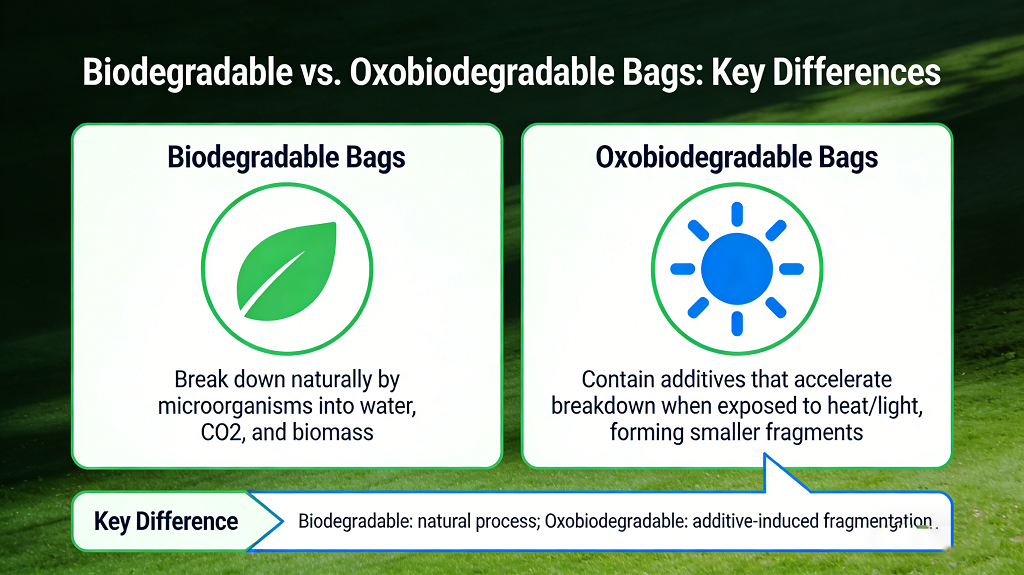
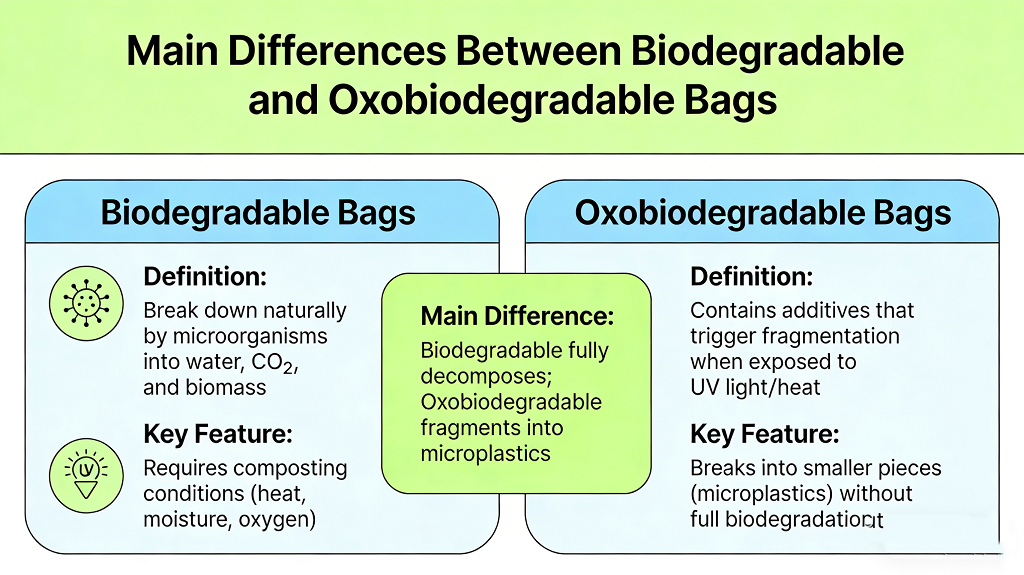
True biodegradable bags are made from plant-based materials like cornstarch, sugarcane, or biopolymers such as PLA (polylactic acid) and PBAT (polybutylene adipate terephthalate). They rely entirely on microbial activity—bacteria, fungi, and other microorganisms—to break down into non-toxic, natural components: carbon dioxide, water, and nutrient-rich biomass that enriches soil.
However, the term “biodegradable” is widely misused. Unlike compostable bags (a regulated subset of biodegradable materials), standard biodegradable bags lack universal timelines or required breakdown conditions. Some may take years to decompose in natural environments, and without specific microbial activity or controlled settings (like industrial composting facilities), they can persist longer than expected. Certified biodegradable bags (a subset often labeled compostable) meet standards like ASTM D6400 or EN13432, ensuring full breakdown within 90–180 days in controlled conditions, leaving no harmful residues.
Oxobiodegradable Bags
Oxobiodegradable bags start as traditional petroleum-based plastics (PE or PP) infused with pro-oxidant additives that trigger a two-stage degradation process. First, the additives react with environmental oxygen to break the plastic’s molecular structure into tiny fragments. In the second stage, microorganisms consume these fragments, breaking them down completely into carbon dioxide, water, and biomass—without releasing methane, a potent greenhouse gas.
Crucially, oxobiodegradable bags differ from oxo-degradable bags, which only fragment into microplastics that persist in ecosystems. Certified oxobiodegradable bags meet standards like ASTM D6954-24, which verifies full degradation without microplastic residues. They also remain compatible with existing recycling streams, making them a flexible option for regions with limited composting infrastructure.
Biodegradable Oxobiodegradable Bags Safety Assessment and Environmental Impact
When evaluating eco-friendly bags, safety and long-term environmental impact are non-negotiable. Here’s how the two compare:
Biodegradable Bags Safety and Impact
Plant-based biodegradable bags are generally safe, as they break down into non-toxic components. However, uncertified products may contain blends of plant-based materials and traditional plastic, which can leave microplastic residues if not processed correctly. For example, a bag labeled “biodegradable” but not compostable may take years to break down in a landfill, where anaerobic conditions prevent microbial activity, leading to methane emissions.
To avoid risks, third-party biodegradable and oxobiodegradable bags certification is critical. Certified compostable bags ensure no toxic residues and meet strict breakdown timelines, making them ideal for users with access to industrial or home composting systems.
Oxobiodegradable Bags Safety and Impact
Oxobiodegradable bags undergo rigorous biodegradable oxobiodegradable bags safety assessment, including ecotoxicity tests under standards like ON S 2200 and ON S 2300. These tests confirm they do not harm seed germination, plant growth, or aquatic life (such as water fleas and earthworms). Unlike traditional plastics, which persist for centuries, oxobiodegradable bags are engineered to degrade only after their intended use, controlled by pro-oxidant additives that delay breakdown until the bag is discarded.
A key environmental benefit is their lack of methane emissions during degradation, unlike some hydro-biodegradable alternatives that release methane in anaerobic landfill conditions. They also reduce litter accumulation, making them a strong solution for applications where recycling rates are low, such as agricultural packaging or garbage bags.
Biodegradable and Oxobiodegradable Bags Certification and Regulations
To combat greenwashing and ensure product integrity, both bag types are subject to global biodegradable and oxobiodegradable bags regulations and certification standards.
Biodegradable Bags Certification and Rules
Biodegradable bags (especially compostable ones) are governed by strict standards:
- ASTM D6400 (U.S.): Requires full breakdown into non-toxic components within 180 days in industrial composting facilities, with no harmful residues.
- EN13432 (EU): Similar to ASTM D6400, with additional requirements for heavy metal limits and ecotoxicity testing.
Many regions have restricted vague “biodegradable” labeling, pushing for specific terms like “compostable” to prevent consumer confusion. For example, the EU’s Single-Use Plastics Directive requires clear labeling of biodegradable materials and their required breakdown conditions.
Oxobiodegradable Bags Certification and Rules
Oxobiodegradable bags are certified under standards like:
- ASTM D6954-24: Outlines testing protocols to verify combined oxidative and microbial breakdown, ensuring no microplastic residues are left behind.
- AFNOR XP T 51-800 (France): A national standard for oxobiodegradable plastics, confirming full degradation in natural environments.
Regulatory attitudes vary by region, but many countries (including the U.S., UK, and parts of Europe) recognize oxobiodegradable bags as a valid waste reduction tool, particularly for applications where recycling is limited. Some regions require biodegradable and oxobiodegradable bags certification to market these products, ensuring they meet environmental safety standards.
FAQ
Q: Can biodegradable and oxobiodegradable bags be recycled together?
A: It depends on the product. Certified oxobiodegradable bags are compatible with traditional plastic recycling streams, as their pro-oxidant additives do not interfere with recycling processes. However, most plant-based biodegradable bags (like PLA) cannot be recycled with traditional plastics, as they contaminate the recycling stream. Always check the product’s certification or labeling for recycling guidance.
Q: Which is better for the environment: biodegradable vs oxobiodegradable plastic bags?
A: It depends on your local waste infrastructure. If you have access to industrial composting, certified biodegradable (compostable) bags are ideal, as they return nutrients to soil. If composting is unavailable, certified oxobiodegradable bags are a better choice, as they degrade fully without microplastics and work with existing recycling systems. Avoid uncertified products of either type, as they may not live up to environmental claims.
Q: How do I verify biodegradable and oxobiodegradable bags certification?
A: Look for third-party certification labels on the packaging. For biodegradable (compostable) bags, seek ASTM D6400 or EN13432. For oxobiodegradable bags, look for ASTM D6954-24 or AFNOR XP T 51-800. You can also verify certifications through the standard-setting organization’s website or the manufacturer’s product documentation.
Conclusion
Understanding the difference between biodegradable and oxobiodegradable bags is essential for making sustainable packaging choices that align with your goals, waste infrastructure, and biodegradable and oxobiodegradable bags regulations. Biodegradable bags (especially certified compostable options) are ideal for those with access to composting systems, as they enrich soil with nutrients. Oxobiodegradable bags offer a cost-effective, flexible solution for reducing litter and plastic accumulation, particularly in regions with limited composting infrastructure.
By prioritizing biodegradable and oxobiodegradable bags certification, conducting a biodegradable oxobiodegradable bags safety assessment, and aligning choices with local waste management systems, individuals and businesses can reduce plastic waste without compromising performance. As technology advances and regulations evolve, both bag types will continue to play critical roles in building a circular, eco-friendly packaging ecosystem.