
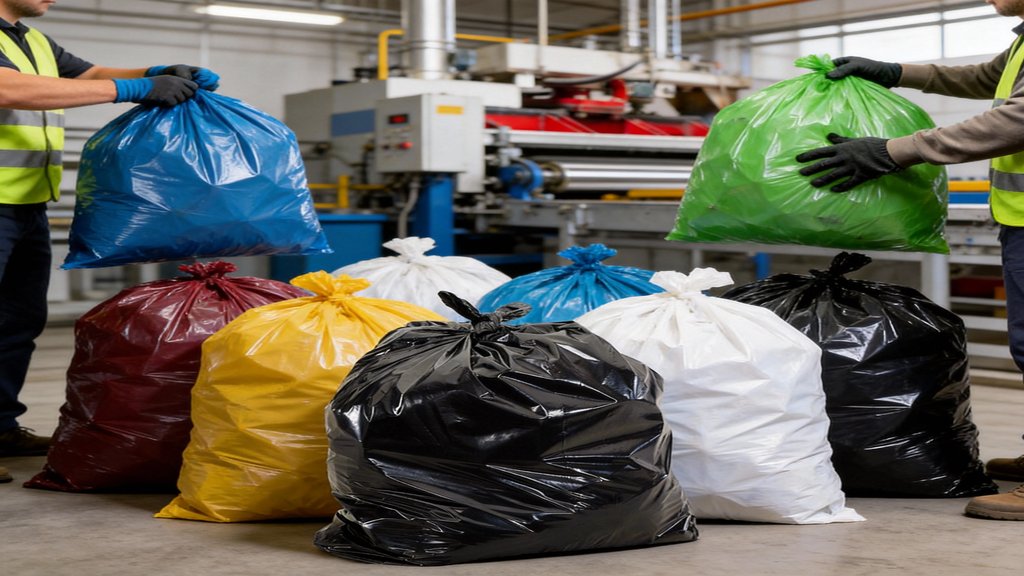
As businesses and industries increasingly prioritize sustainable operations, the demand for eco-friendly waste management solutions has skyrocketed. For years, heavy duty industrial garbage bags were synonymous with single-use plastic, designed to withstand sharp debris, heavy loads, and harsh conditions but often ending up in landfills for centuries. Today, however, the market offers a growing range of sustainable alternatives that balance durability with environmental responsibility—including recyclable, biodegradable, and compostable options tailored to common industrial sizes like 40 gallon heavy duty industrial garbage bags, 45 gallon heavy duty industrial garbage bags, and 50-60 gallon heavy duty industrial garbage bags.
Key Takeaways
- Eco-friendly heavy duty industrial garbage bags now match the durability of traditional plastic options, with recyclable, biodegradable, and compostable variants available in standard industrial sizes like 40, 45, and 50-60 gallons.
- Recyclable industrial grade heavy duty garbage bags and contractor heavy duty industrial garbage bags use post-consumer recycled plastic to reduce virgin plastic reliance while handling sharp, heavy debris.
- Choosing the right sustainable bag depends on matching waste type, verifying third-party certifications, and ensuring it meets your facility’s durability requirements.
Breaking Down Eco-Friendly Heavy Duty Industrial Garbage Bag Categories
Gone are the days when industrial facilities had to choose between strength and sustainability. Modern eco-friendly heavy duty garbage bags fall into three primary categories, each with unique benefits for different waste management needs:
Recyclable Industrial Grade Heavy Duty Garbage Bags
Recyclable options are crafted from post-consumer recycled (PCR) high-density polyethylene (HDPE) or low-density polyethylene (LDPE), materials known for their exceptional tear resistance and load-bearing capacity. These bags maintain the thick, puncture-proof construction required for contractor heavy duty industrial garbage bags—ideal for construction debris, sharp metal scraps, or bulk warehouse waste—while reducing reliance on virgin plastic. Many manufacturers source PCR plastic from recycled consumer products, diverting waste from landfills and creating a circular lifecycle.
Certifications like the Global Recycled Standard (GRS) ensure these bags meet strict criteria for recycled content (minimum 20%) and supply chain transparency, making them a reliable choice for businesses aiming to reduce their carbon footprint. For example, 45 gallon heavy duty industrial garbage bags made from GRS-certified HDPE can handle up to 50 pounds of waste without tearing, matching the performance of traditional plastic bags while cutting virgin plastic use by 30-50%. Similarly, 40 gallon heavy duty industrial garbage bags in this category work perfectly for small warehouses or retail backrooms, offering the same puncture resistance as non-recyclable alternatives.
Biodegradable and Oxobiodegradable Industrial Bags
Biodegradable heavy duty garbage bags are formulated with additives that trigger decomposition when exposed to sunlight, heat, or microbial activity, breaking down into water, carbon dioxide, and organic matter over time. Unlike traditional plastic, which can persist in the environment for 200+ years, these bags degrade within 1-5 years under optimal conditions, making them suitable for outdoor industrial sites, construction projects, or facilities with limited recycling access.
Oxobiodegradable options, certified to standards like ASTM D6954, are particularly popular for 50-60 gallon heavy duty industrial garbage bags used in landscaping or demolition. They maintain their strength during use but begin breaking down once discarded, reducing the risk of long-term plastic pollution. Many manufacturers also offer customizable features like drawstrings or star-seal bottoms, ensuring these bags are as functional as their non-eco-friendly counterparts. For example, 45 gallon heavy duty industrial garbage bags in this category can handle mixed waste streams, from packaging materials to light construction scraps, without compromising on durability.
Compostable Industrial Garbage Bags
For facilities focused on organic waste management, compostable heavy duty garbage bags are the gold standard. Made from plant-based materials like cornstarch, PLA (polylactic acid), or PBAT (polybutylene adipate terephthalate), these bags meet strict certifications like ASTM D6400 or DINplus, meaning they decompose completely in 4-6 weeks in industrial composting facilities.
While compostable bags were once limited to smaller sizes, modern options include 40 gallon heavy duty industrial garbage bags designed for food processing plants, agricultural operations, or facilities with organic waste streams. These bags can handle wet, heavy organic waste without leaking, and when composted, they contribute nutrient-rich matter to soil—closing the loop on waste management entirely. Brands like BIOvative offer 100% plastic-free, climate-neutral compostable industrial bags, produced locally in Germany with renewable European raw materials to minimize transportation emissions. Even 50-60 gallon heavy duty industrial garbage bags are now available in compostable variants, making them suitable for large-scale agricultural waste or food manufacturing byproducts.
Sizing and Customization for Every Industrial Facility
One of the biggest misconceptions about eco-friendly industrial garbage bags is that they lack the size variety of traditional plastic bags. In reality, manufacturers now offer sustainable options for every common industrial size, tailored to specific facility needs:
- 40 gallon heavy duty industrial garbage bags: Ideal for small warehouses, retail backrooms, or office complexes, these bags often come in recyclable HDPE or biodegradable blends, with thicknesses ranging from 1.1 to 3.0 mil to handle light to medium loads. Many include color-coding options to support waste sorting, such as green bags for organic waste or blue for recyclables.
- 45 gallon heavy duty industrial garbage bags: A versatile choice for manufacturing facilities, these bags are available in compostable or GRS-certified recyclable options, with reinforced bottoms to prevent leaks from sharp or heavy waste. They are often used for mixed industrial scrap, from plastic packaging to metal shavings, and can be customized with printed logos to align with a business’s sustainability branding.
- 50-60 gallon heavy duty industrial garbage bags: The go-to for contractor heavy duty industrial garbage bags, these large bags are engineered to withstand construction debris, landscaping waste, and bulk industrial scrap. Many are made from recycled HDPE with 3.0 mil thickness, ensuring they resist tears from nails, glass, or metal. Some manufacturers also offer drawstring closures for easy tying and transport, a key feature for construction sites with frequent waste removal.
Customization is also a key feature, with manufacturers offering options like color coding (to support waste sorting programs), printed logos, or specialized closures like drawstrings or cross-ties. For example, blue recyclable industrial grade heavy duty garbage bags can be used to separate paper and plastic waste, while black biodegradable bags handle non-recyclable industrial trash—streamlining waste management and improving recycling rates.
How to Select the Perfect Eco-Friendly Industrial Garbage Bag
Selecting the best sustainable industrial garbage bag depends on three key factors that balance environmental impact with operational needs:
- Waste Type: Match the bag to your waste stream. Compostable bags work best for organic waste like food scraps or agricultural byproducts, while recyclable HDPE bags are ideal for sharp or heavy non-organic debris like construction materials. Biodegradable options are a flexible choice for mixed waste streams where recycling access is limited. For example, contractor heavy duty industrial garbage bags made from recycled HDPE are the top pick for construction sites, while 40 gallon heavy duty industrial garbage bags in compostable blends are perfect for small food processing facilities.
- Certifications: Look for third-party certifications like GRS, ASTM D6400, or DINplus to ensure the bag meets genuine environmental standards. Avoid vague “eco-friendly” claims without supporting documentation, as some products may not live up to their sustainability promises. For instance, GRS certification confirms that recyclable industrial grade heavy duty garbage bags contain a minimum of 20% post-consumer recycled content.
- Durability Requirements: Check the mil thickness and load capacity. Contractor heavy duty industrial garbage bags need a minimum 2.0 mil thickness to handle construction waste, while 40 gallon heavy duty industrial garbage bags for office use may only need 1.1 mil. For facilities handling sharp metal scraps or broken glass, opt for thicker 45 gallon heavy duty industrial garbage bags or 50-60 gallon heavy duty industrial garbage bags with reinforced seams to prevent punctures.
FAQ
Q: Can eco-friendly heavy duty industrial garbage bags handle the same sharp debris as traditional plastic bags?
A: Yes. Recyclable industrial grade heavy duty garbage bags and contractor heavy duty industrial garbage bags are made from post-consumer recycled HDPE or LDPE, which offers the same tear and puncture resistance as virgin plastic. Many also have reinforced seams and thick mil thickness (2.0 to 3.0 mil) to handle sharp construction debris, metal scraps, and glass.
Q: Are eco-friendly heavy duty industrial garbage bags available in all standard industrial sizes?
A: Absolutely. Manufacturers now offer sustainable options in all common industrial sizes, including 40 gallon heavy duty industrial garbage bags, 45 gallon heavy duty industrial garbage bags, and 50-60 gallon heavy duty industrial garbage bags. These are available in recyclable, biodegradable, and compostable variants to match different waste streams.
Q: How can I verify that an eco-friendly industrial garbage bag is truly sustainable?
A: Always look for third-party certifications. For recyclable bags, check for the Global Recycled Standard (GRS) to confirm post-consumer recycled content. Compostable bags should have ASTM D6400 or DINplus certification, which ensures they break down completely in industrial composting facilities. Biodegradable bags should meet ASTM D6954 standards for oxobiodegradation. Avoid products with unsubstantiated “eco-friendly” or “green” claims.