
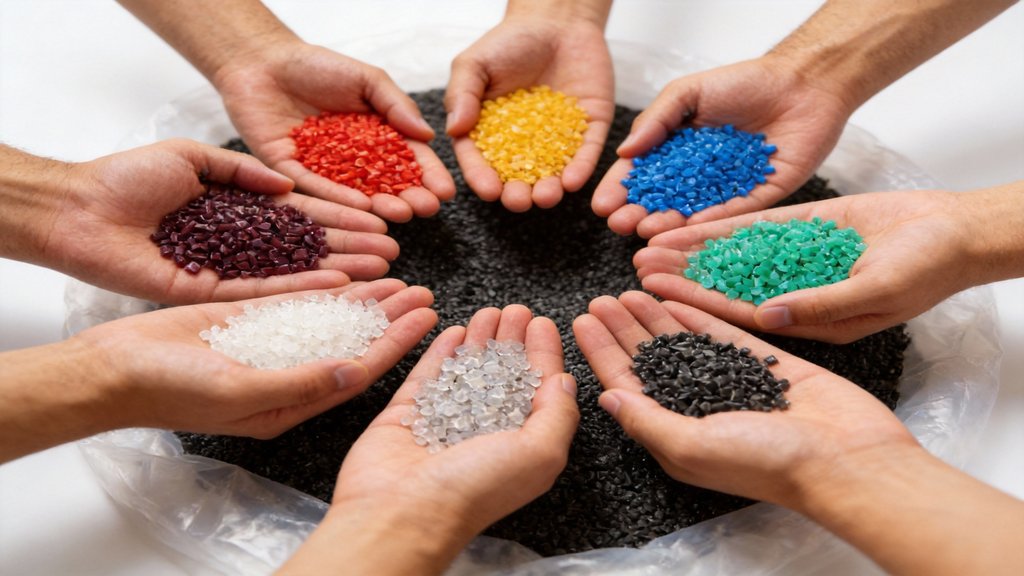
Polypropylene vs polyethylene industrial use represents one of the most critical material selection decisions for manufacturers, engineers, and supply chain managers. Both are top-tier thermoplastics in the polyolefin family, sharing traits like lightweight design, chemical resistance, and moldability, but their unique molecular structures create distinct performance profiles tailored to specific use cases. Understanding these differences is essential for balancing durability, cost-efficiency, and regulatory compliance, whether you’re sourcing materials for heavy-duty infrastructure or food-safe packaging.
Key Takeaways
- Structural and density gaps: PP vs PE plastic density differences stem from molecular makeup, with polypropylene (PP) being lighter (0.895–0.915 g/cm³) and more rigid, while polyethylene (PE) has variable density by type, offering greater flexibility or load-bearing capacity.
- Application-specific performance: PP excels in high-temperature, high-strength industrial uses, while PE dominates flexible packaging and cold-resistant applications, with clear divides in PP vs PE plastic for food packaging suitability.
- Sustainability and processing contrasts: PP vs PE plastic processing differences impact production costs, and polypropylene vs polyethylene recycling differences play a critical role in circular economy goals, with PE having higher global recycling rates.
Core Chemical, Structural, and Density Variances
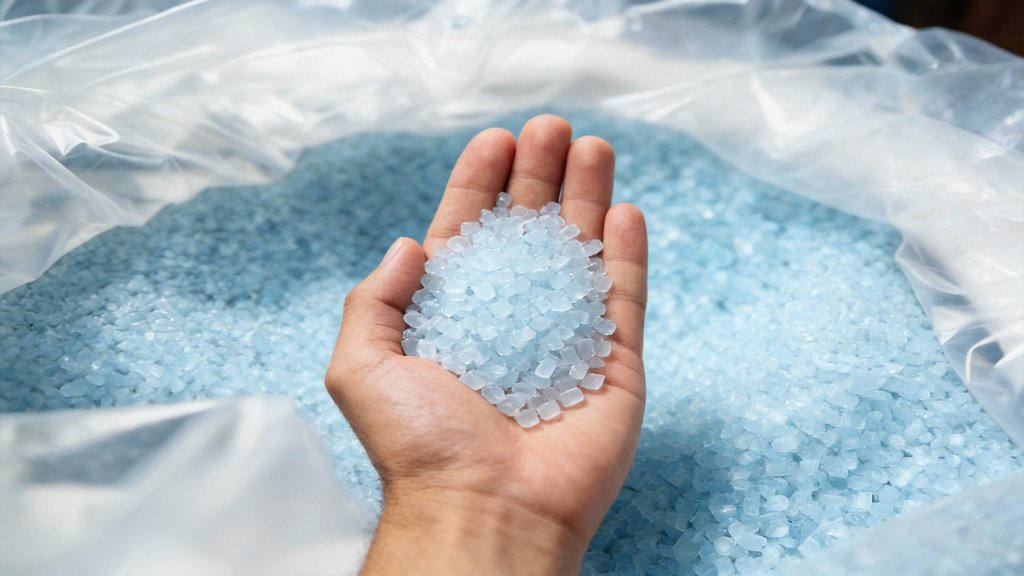
The fundamental distinction between PP and PE lies in their molecular makeup, which directly drives PP vs PE plastic density differences and performance traits. PE is polymerized from ethylene monomers, forming simple, linear carbon-hydrogen chains with minimal branching. This straightforward structure creates low crystallinity, enhancing flexibility and impact resistance. PP, by contrast, is derived from propylene monomers, which add a methyl (-CH₃) side group to every other carbon in the polymer chain. These side groups increase crystallinity, resulting in greater rigidity, heat resistance, and tensile strength.
This structural divergence translates to measurable density differences. PP has a slightly lower density range of 0.895–0.915 g/cm³, making it one of the lightest commercial plastics, ideal for weight-sensitive polypropylene vs polyethylene industrial use applications like automotive components or shipping crates. PE’s density varies by type: low-density polyethylene (LDPE) clocks in at 0.910–0.925 g/cm³, while high-density polyethylene (HDPE) ranges from 0.940–0.965 g/cm³, giving it a more substantial feel and better load-bearing capacity for heavy-duty uses like industrial pipes. These PP vs PE plastic density differences are a primary factor for engineers designing weight-sensitive or load-bearing parts.
Performance, Processing, and Food Packaging Suitability
When evaluating polypropylene vs polyethylene industrial use, thermal performance, mechanical strength, and processing requirements are non-negotiable considerations. PP outperforms PE in high-temperature environments, with a melting point of 155–170°C and a continuous service temperature of up to 120°C. This makes it the go-to choice for applications requiring steam sterilization, such as medical device components, or hot-fill food packaging like microwave-safe containers. PE, by comparison, has a lower melting point of 100–140°C, limiting its use to temperatures below 100°C, but it excels in cold conditions: HDPE maintains impact resistance down to -50°C, making it ideal for cold-storage packaging and outdoor industrial equipment.
PP vs PE plastic processing differences also shape their industrial use cases. PE has a lower melting point and better melt flow, making it easier to process with techniques like blow molding, extrusion, and heat sealing. Its low heat-seal initiation temperature makes it the preferred material for flexible packaging, where airtight seals are critical for food freshness. PP requires higher processing temperatures (180–240°C) and greater pressure due to its lower melt flow, making it better suited for injection molding and thermoforming. While this adds to production energy costs, PP’s dimensional stability ensures consistent, precise parts for complex industrial components.
For PP vs PE plastic for food packaging, both materials are FDA-approved for food contact, but their traits cater to distinct needs. PP’s transparency (especially in thin films) and heat resistance make it ideal for rigid containers, yogurt cups, and microwave-safe lids, where durability at high temperatures is key. PE’s superior flexibility and moisture barrier properties, however, make it the top choice for plastic bags, cling wrap, and squeeze bottles, where low-temperature sealing and puncture resistance are critical to preserving food freshness.
Recycling and Environmental Considerations for Industrial Use
Sustainability is an increasingly critical factor in polypropylene vs polyethylene industrial use, and polypropylene vs polyethylene recycling differences are a key consideration for supply chain managers. Both plastics are recyclable, but PE has a higher global recycling rate, particularly HDPE and LDPE, due to their widespread use in easily identifiable containers like milk jugs and plastic bottles. These items are sorted efficiently in curbside recycling programs, making PE a more accessible choice for brands prioritizing closed-loop systems.
PP is less commonly recycled, as it requires specialized facilities and is often mixed with other plastics in waste streams, reducing its recovery rate. That said, PP’s durability allows for multiple reprocessing cycles when properly sorted, and advancements in chemical recycling are expanding its circular economy potential. For industrial applications where long-term durability is a priority, PP’s ability to retain strength after reprocessing makes it a viable sustainable choice, provided proper sorting infrastructure is in place. These polypropylene vs polyethylene recycling differences mean that PE is often the first choice for companies aiming to meet short-term sustainability targets, while PP is a strong option for those investing in advanced recycling technologies.
FAQ
Q: How do PP vs PE plastic density differences impact industrial application selection?
A: PP’s lower density (0.895–0.915 g/cm³) makes it ideal for weight-sensitive applications like automotive components or shipping crates, where reducing overall load can cut transportation costs. PE’s variable density—from 0.910–0.925 g/cm³ for LDPE to 0.940–0.965 g/cm³ for HDPE—means LDPE is suited for flexible packaging, while HDPE excels in heavy-duty pipes and load-bearing containers.
Q: Which material is better for PP vs PE plastic for food packaging?
A: It depends on the packaging type. PP is best for rigid, heat-resistant food containers (like microwave-safe lids or yogurt cups) due to its ability to withstand high temperatures without warping. PE is preferred for flexible packaging (like plastic bags or cling wrap) because of its superior moisture barrier and low-temperature sealing capabilities, which preserve food freshness.
Q: What are the main PP vs PE plastic processing differences that affect industrial production?
A: PE has a lower melting point and better melt flow, making it easier and more cost-effective to process with techniques like blow molding and heat sealing, which are ideal for high-volume flexible packaging. PP requires higher processing temperatures (180–240°C) and greater pressure, making it better suited for injection molding precise, complex industrial parts, though this adds to energy costs.
Conclusion
Polypropylene vs polyethylene industrial use hinges on understanding the unique strengths of each material, driven by structural, performance, and sustainability differences. PP vs PE plastic density differences make PP the go-to for weight-sensitive applications, while PE’s variable density offers flexibility or load-bearing capacity as needed. PP vs PE plastic for food packaging caters to rigid, heat-resistant needs and flexible, moisture-barrier requirements, respectively, and PP vs PE plastic processing differences impact production costs and scalability. Finally, polypropylene vs polyethylene recycling differences play a critical role in sustainability goals, with PE offering more accessible recycling options today, and PP showing promise with advanced recycling technologies. By evaluating these factors, industrial professionals can select the right material to balance performance, cost, and environmental responsibility for their specific use case