
For businesses across industries—from bakeries relying on food-safe packaging to e-commerce brands shipping fragile goods—plastic bags are a foundational packaging solution. But when sourcing these essential products, a critical question often arises: do plastic bag manufacturers vs distributors differ in their quality control standards, and how does that impact your business? Understanding the distinctions between these two types of suppliers, along with their approaches to quality, plastic bag manufacturers vs distributors minimum order requirements, plastic bag manufacturers vs distributors customization, and pricing, is key to making a cost-effective, reliable choice for plastic bag manufacturers vs distributors for business needs.
Key Takeaways
- Plastic bag manufacturers vs distributors differ most significantly in supply chain control: manufacturers oversee end-to-end production for rigorous, consistent quality control, while distributors rely on third-party producers, creating potential quality variability.
- Plastic bag manufacturers vs distributors minimum order models cater to different business sizes: manufacturers require large bulk orders for cost efficiency, while distributors offer smaller, flexible MOQs ideal for small and medium-sized businesses (SMBs).
- Plastic bag manufacturers vs distributors customization capabilities vary widely: manufacturers deliver fully tailored solutions with quality oversight, while distributors offer limited pre-set customization options with less production control.
Supply Chain Control: The Foundation of Plastic Bag Manufacturers vs Distributors Quality Standards
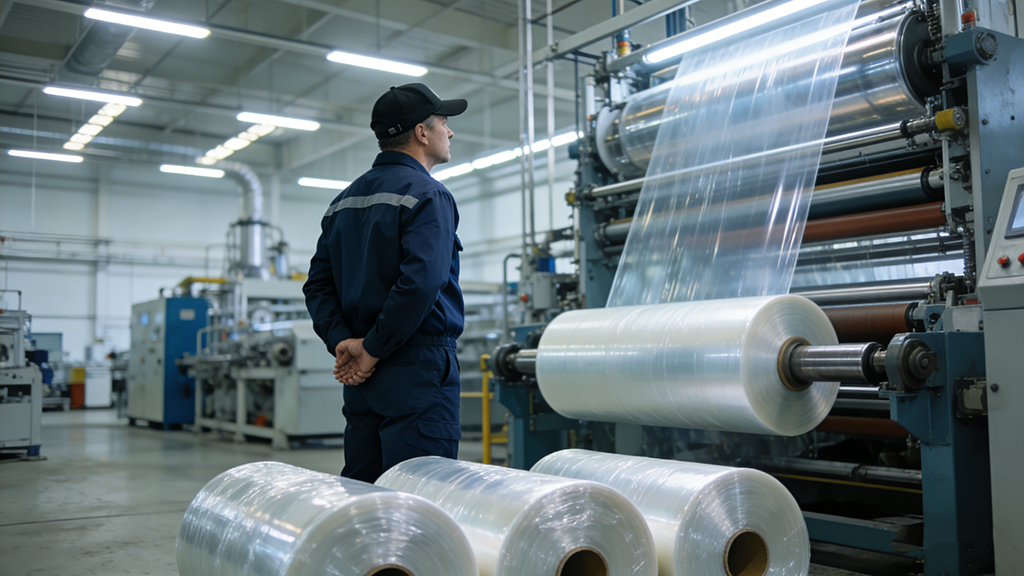
The most critical divide between plastic bag manufacturers vs distributors lies in their level of control over the production process, which directly shapes their quality control protocols. Plastic bag manufacturers oversee every stage of creation, from sourcing raw materials to extruding, printing, and finishing the final product. This end-to-end control translates to integrated, rigorous quality checks that leave no room for oversight.
Take U.S.-based Poly Pak Plastics, a hybrid manufacturer and distributor, as an example. By handling material extrusion and in-house conversion, the company maintains full oversight over product quality, ensuring consistent thickness, strength, and compliance with safety standards—critical for food packaging applications. Similarly, Shenzhen-based Mingxingfu Plastic enforces multi-stage inspections: raw materials are tested for food-grade safety and freedom from harmful additives before production, and finished bags undergo tensile strength, seal integrity, and print quality checks before shipment. Its ISO 9001 certification further underscores a commitment to standardized, repeatable quality processes.
Plastic bag distributors, by contrast, act as intermediaries, sourcing products from multiple manufacturers to offer a broad inventory. While reputable distributors implement their own quality checks, they lack direct control over production. This can create variability: if a distributor works with multiple manufacturers with differing standards, the quality of bags in a single order or across repeat orders may fluctuate. For businesses requiring consistent compliance—such as those in the food industry needing adherence to GB4806.7-2023 or EU RoHS regulations—this lack of end-to-end control can pose significant risks. This is especially true for HDPE plastic bag manufacturers vs distributors, as HDPE bags require precise thickness and strength for heavy-duty use, making supply chain control non-negotiable.
Plastic Bag Manufacturers vs Distributors Minimum Order and Pricing: Flexibility vs. Volume Savings
Plastic bag manufacturers vs distributors minimum order requirements are a major deciding factor for businesses of all sizes, and they tie closely to quality control. Plastic bag manufacturers typically require higher MOQs to justify the setup costs of production runs. For example, Vietnam’s Hanpak JSC sets a 1-ton MOQ for its HDPE plastic bag lines, ideal for large-scale retailers or manufacturers with steady, high-volume needs. These higher MOQs often come with consistent quality, as production runs are optimized for precision, and manufacturers can allocate more resources to quality checks for bulk orders. Pricing per unit is also lower for bulk orders, making manufacturers the most cost-effective choice for businesses with high demand.
Plastic bag distributors, however, cater to SMBs with lower, more flexible MOQs. Many keep standard-sized poly bags, HDPE plastic bags, and even basic custom options in stock, allowing businesses to order smaller quantities without sacrificing lead times. Poly Pak Plastics, for instance, offers standard bags with no minimum order requirement, while custom orders still benefit from a 5-day turnaround. For SMBs or businesses testing new packaging designs, this flexibility can be a game-changer, though it may come with slightly higher per-unit costs compared to manufacturer-direct bulk orders. When evaluating plastic bag manufacturers vs distributors for business, it’s critical to balance your immediate order needs with long-term cost efficiency and quality consistency.
Plastic Bag Manufacturers vs Distributors Customization: Tailored Solutions vs. Limited Adaptability
When it comes to plastic bag manufacturers vs distributors customization, the gap in capabilities is stark, and this directly impacts quality. Plastic bag manufacturers offer unmatched flexibility, working directly with businesses to refine every detail, from material thickness and print color accuracy to specialized features like moisture resistance or static-free properties. This level of collaboration ensures custom bags align with brand identity and meet functional requirements, with quality control embedded in every step of the process.
Vietnam’s VNK Plastic Bag Manufacturer, for example, uses advanced printing technology and strict pre-production sample reviews to ensure custom HDPE plastic bags meet exact client specifications. Mingxingfu Plastic goes a step further, offering one-on-one support for custom orders, from initial design to final delivery, with the ability to adjust materials or dimensions mid-process while maintaining quality standards. This is especially valuable for businesses in regulated industries, where custom packaging must meet strict safety and compliance rules.
Plastic bag distributors, by contrast, offer limited customization options, such as pre-printed logos on standard bag sizes. They cannot match the depth of customization available from manufacturers, as they source pre-made products. Any custom changes require coordinating with third-party manufacturers, leading to longer lead times and less oversight over quality during the customization process. For businesses seeking fully tailored packaging, plastic bag manufacturers vs distributors customization capabilities make manufacturers the clear choice.
FAQ
Q: How do plastic bag manufacturers vs distributors handle sustainable packaging quality?
A: Plastic bag manufacturers are often better positioned to verify sustainable packaging quality, as they oversee production from raw material sourcing to final delivery. Leading manufacturers like Mondi Group and TIPA Compostable Packaging invest in R&D to create biodegradable and compostable bags, with rigorous testing to ensure durability during use and proper decomposition after disposal. Plastic bag distributors may carry eco-friendly options, but they often lack direct insight into production processes or third-party certifications that validate sustainability claims, making it harder to confirm compliance with regulations.
Q: For small businesses, is a distributor or manufacturer a better choice for HDPE plastic bag manufacturers vs distributors?
A: It depends on your needs. If you require small plastic bag manufacturers vs distributors minimum order quantities, fast lead times, or access to a wide range of standard HDPE plastic bags, a reputable distributor is a flexible, reliable option. However, if you need consistent quality, deep customization, or long-term cost savings on bulk orders, a manufacturer will offer more control and value. Always request samples from distributors to verify quality consistency before placing large orders.
Q: What should I prioritize when vetting plastic bag manufacturers vs distributors for business?
A: For both types of suppliers, prioritize clear certifications (such as ISO 9001, food-grade safety certifications, or sustainability accreditations), transparent quality control protocols, and a track record of compliance. For manufacturers, ask about their raw material sourcing and production inspection processes. For distributors, inquire about their manufacturer partnerships, internal quality checks, and return policies for defective products. Requesting product samples to test strength, seal integrity, and print quality is also critical for verifying consistency